Project titleStrengthening the psychosocial, economic and peaceful survival capacity of refugees and displaced persons in northern Ethiopia
Project locationsMekele and Shire areas in the Tigray region and Welo area in the Amhara region
Target groupsWar victims, refugees and displaced persons
Project periodJanuary to June 2023
Project budget: € 163.825
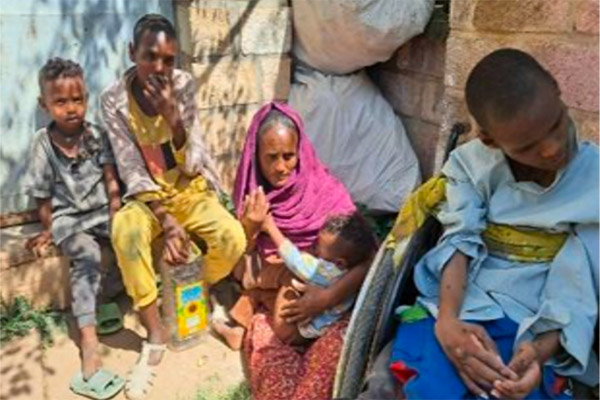
In the fall of 2020, civil war broke out in the Tigray region and spread from there, even across national borders. The trigger was the conflict between the Tigray People's Liberation Front (TPF), the militias of the Tigray regional government, and the Ethiopian armed forces, as well as militias from neighboring countries. By 2023, this conflict had claimed an estimated half a million lives, and over two million people had become refugees.
Reconstruction and peace for northern Ethiopia
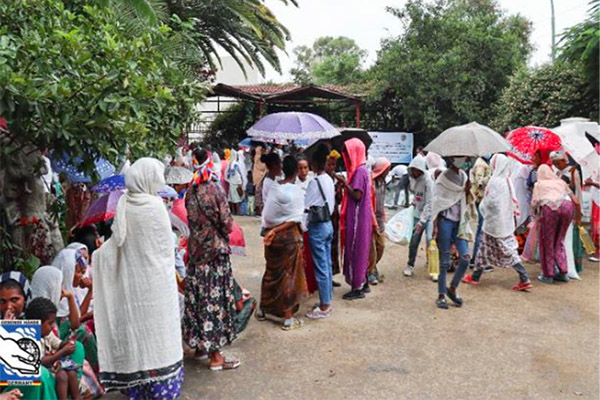
Between January and July 2023, our project work helped people affected by the conflict, especially women, children, and the elderly. We distributed essential aid such as basic foodstuffs and seeds to 950 families, or 4,750 recipients. In addition, project staff supported refugees in coping with conflict and trauma in order to restore social peace. Our project partners provided psychological training to community leaders, who in turn trained volunteer community workers. Following several days of financial training (see photos left and right), 100 people in need, primarily women, received some capital to enable families or local communities to resume farming or start small businesses. In this way, the project also made a significant contribution to promoting long-term economic stability and peace in the civil war region.
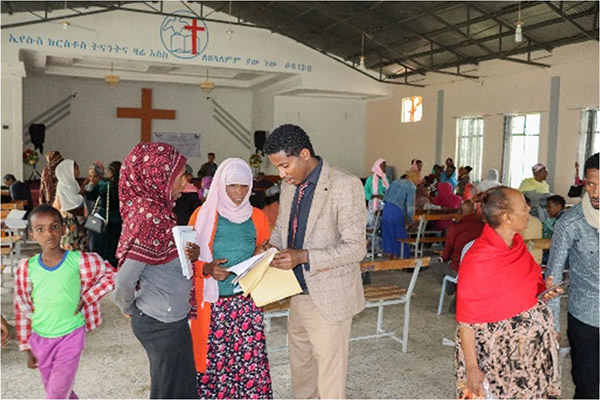
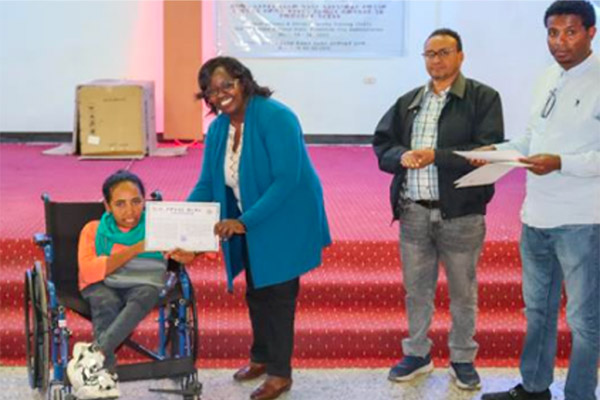
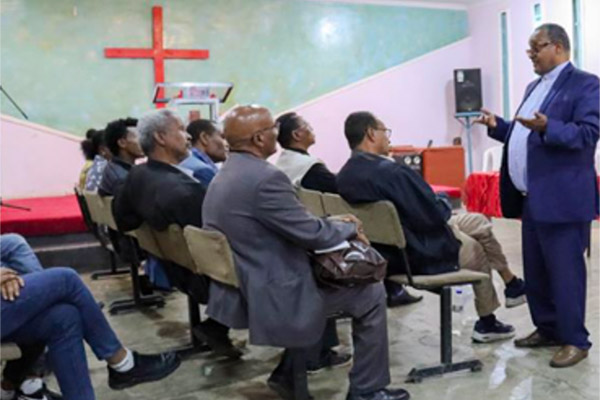
Our church partner organizations, the Evangelical Alliance in Africa and the Community of Evangelical Churches in Ethiopia, have taken on the project implementation. They have formed teams from many volunteers in the local churches in the conflict zone and established aid committees (in the picture you can see the head of the Ethiopian Alliance with volunteers in a church).
Selam Melaku
Before her time at the IDP center in Shire, she owned a hotel where she supported herself and her family, but it was destroyed during the conflict. Selam Melaku is eager to help, but has fewer resources to do so. The support she receives helps her in the short term, but she lives with the hope of a better tomorrow for herself and her two children.
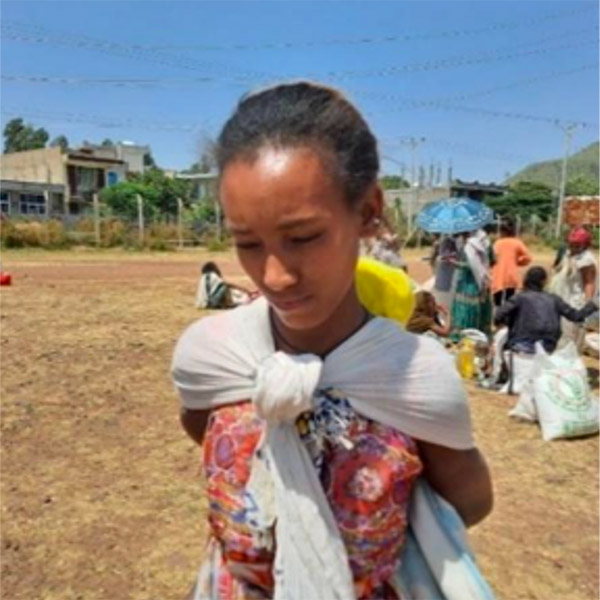
Mehret Birhanu
Mehret Birhanu brought four of her seven children to the aid center, as all of her children have health limitations. One of her sons is confined to a fixed wheelchair and cannot move his body without assistance.
Before she was expelled from Adaro and came to Shire-Enda, she owned a shop that helped support herself. She can only provide for her children through occasional support from organizations. Her husband has not yet returned from the war.